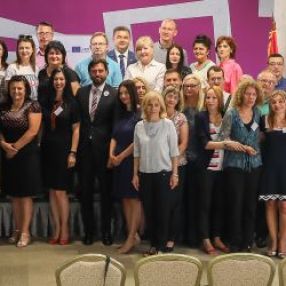
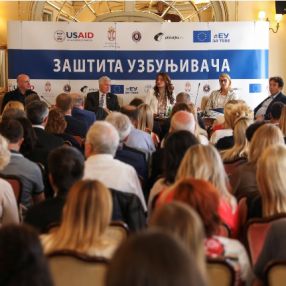
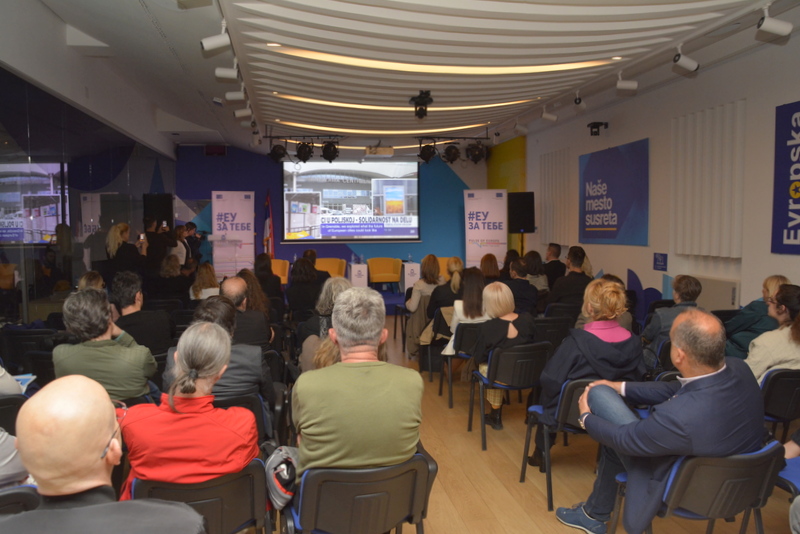
The Head of the Delegation of the European Union to Serbia, Ambassador Andreas von Beckerath, stated that the citizens of Serbia have the right to be precisely informed about the policies of the EU, of which they want to be a part, and that the media contributions of almost 400 journalists, created within the six-year project "Pulse of Europe – Media Trips to EU", contributed significantly to this.
Serbian citizens deserve to be properly and accurately informed on all relevant EU policies, standards and practices because this is what they aspire to become a part of. Therefore, they really deserve to know more about it in a factual, objective and honest way," Von Beckerath said at the closing event of the "Pulse of Europe – Media Trips to EU" project, held on 13 May in Europe House in Belgrade.
He pointed out that independent journalism "is not a luxury", but it is a necessity for the progress of Serbia.
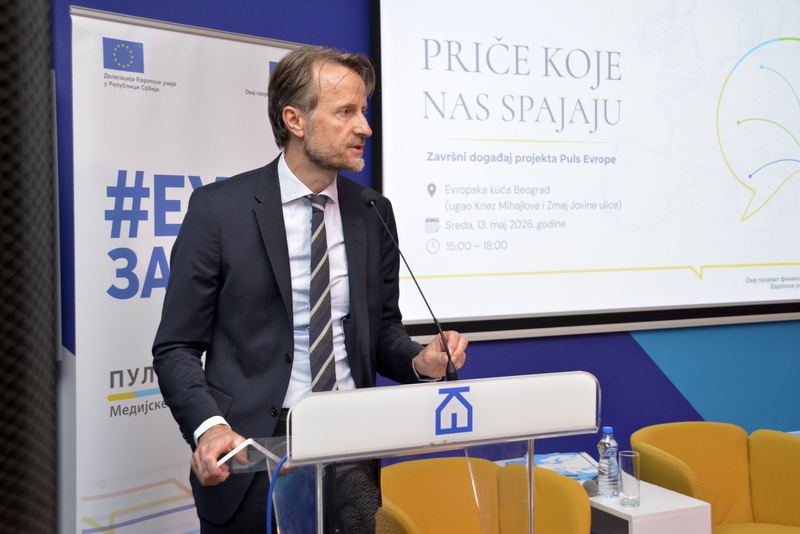
"Journalists are guardians of the public interest and deserve protection, not pressure. Therefore, this media travel project may be ending, but the work on informing, engaging and preparing Serbia for EU membership continues," said Von Beckerath.
Speaking about the "Pulse of Europe – Media Trips to EU" project, Von Beckerat said that almost 400 journalists from Serbia participated in group and individual trips to 21 EU member states.
"I want to congratulate you for what you have achieved in terms of providing high-quality, informative and interesting content that has helped us to better inform the citizens of Serbia about what the European Union is," he said.
Von Beckerath stated that media visits are "much more than mere observation," as they are about "learning, questioning, and explaining complex realities."
"During the past six years, you witnessed firsthand how EU countries solved various problems, various challenges that Serbia is also facing," said the EU ambassador to Serbia.
Von Beckerath also said that "the reports produced through this project have set a standard for how EU-related topics should be covered: with depth, balance, and a focus on what matters to people's daily lives”.
Marina Rakić, team leader of the "Pulse of Europe" project, stated that during it more than 640 media reports were created, of which more than 27 hours of television and more than seven hours of radio programmes.
"The way the project was set up, although the participating journalists were obliged to publish one story after the media visit, in the majority of cases, colleagues published more than one story, and used the material obtained in the country we visited to the maximum," she pointed out.
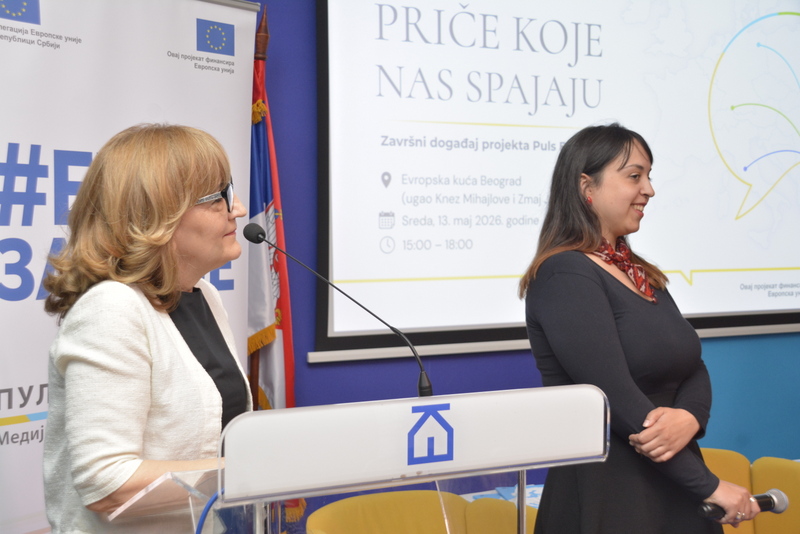
"We even know that a lot of material is used in the archives and for later reports," said Rakić and stated that national, as well as regional and local media participated in the programme.
"With this project, we were in 21 EU member states; the number of journalists who participated is 381, and they come from 55 media in Serbia. Those 55 media are national, regional, and local. We really tried to go outside Belgrade and include local media as well. They are also electronic, print and online media," said Marina Rakić.
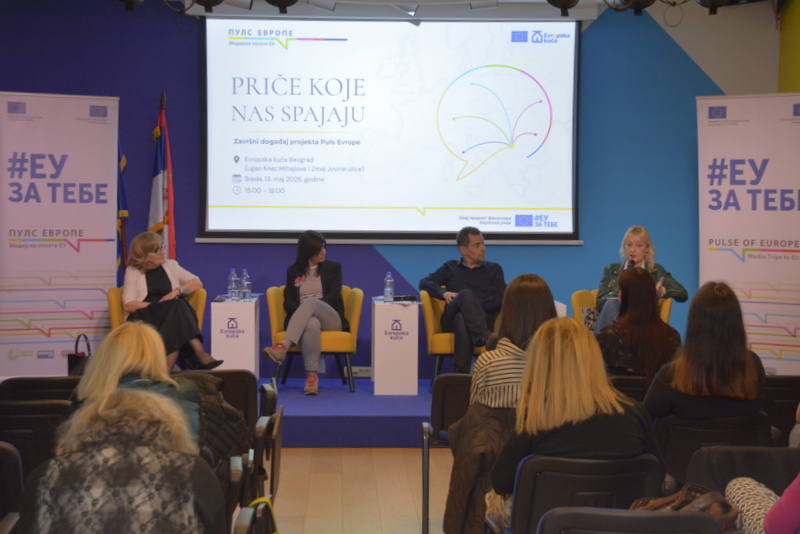
As part of the closing event, the film "Stories that Unite Us" produced by the project was shown and a panel discussion was held on European standards of media freedom and the fight against disinformation. Nataša Ivanovski, editor of the foreign policy section of the daily newspaper Blic, Aleksandar Roknić, editor of the Danas newspaper, and Tamara Filipović Stevanović, general secretary of NUNS, participated. The journalists shared the experiences of Denmark and the Netherlands in the field of media, while the representative of NUNS assessed that despite the restrictive environment, investigative journalists in Serbia work very well.
The "Pulse of Europe" project started in 2020, and the first visits to EU member states were organised in September 2021 due to the covid pandemic; ever since the trips have been regular.
The project was implemented by a consortium led by the Goethe-Institut in Serbia in cooperation with the Independent Journalistic Association of Serbia and the Center for Cultural Decontamination. It closes at the end of May 2026.
Source: Beta and Pulse of Europe team