Osečina, 29 October 2026 – An old chair does not have to end up in a landfill, and a minor bicycle fault does not have to mean buying a new one. Students and residents of Osečina learned how to extend the lifespan of everyday items through two hands-on workshops held at the Green Market and the “Braća Nedić” Educational Centre, as part of the “Worth Keeping” campaign implemented by the EU for Circular Economy in Serbia project.
“It is important for people to understand that a minor fault is not a reason to throw away an item that can still be useful. Often, a simple repair is all it takes to extend its lifespan. Many items also have historical value, and it is a great shame when they end up in the rubbish, as has happened in the past. This is why today's workshops in Osečina are important, and why we should organise them more frequently. In this way, we preserve useful items while also protecting our environment from pollution caused by discarded objects,” said Nada Milovanović, Head of the Public Hygiene and Water Quality Sector in Osečina and President of the Green Council of the Municipality of Osečina.
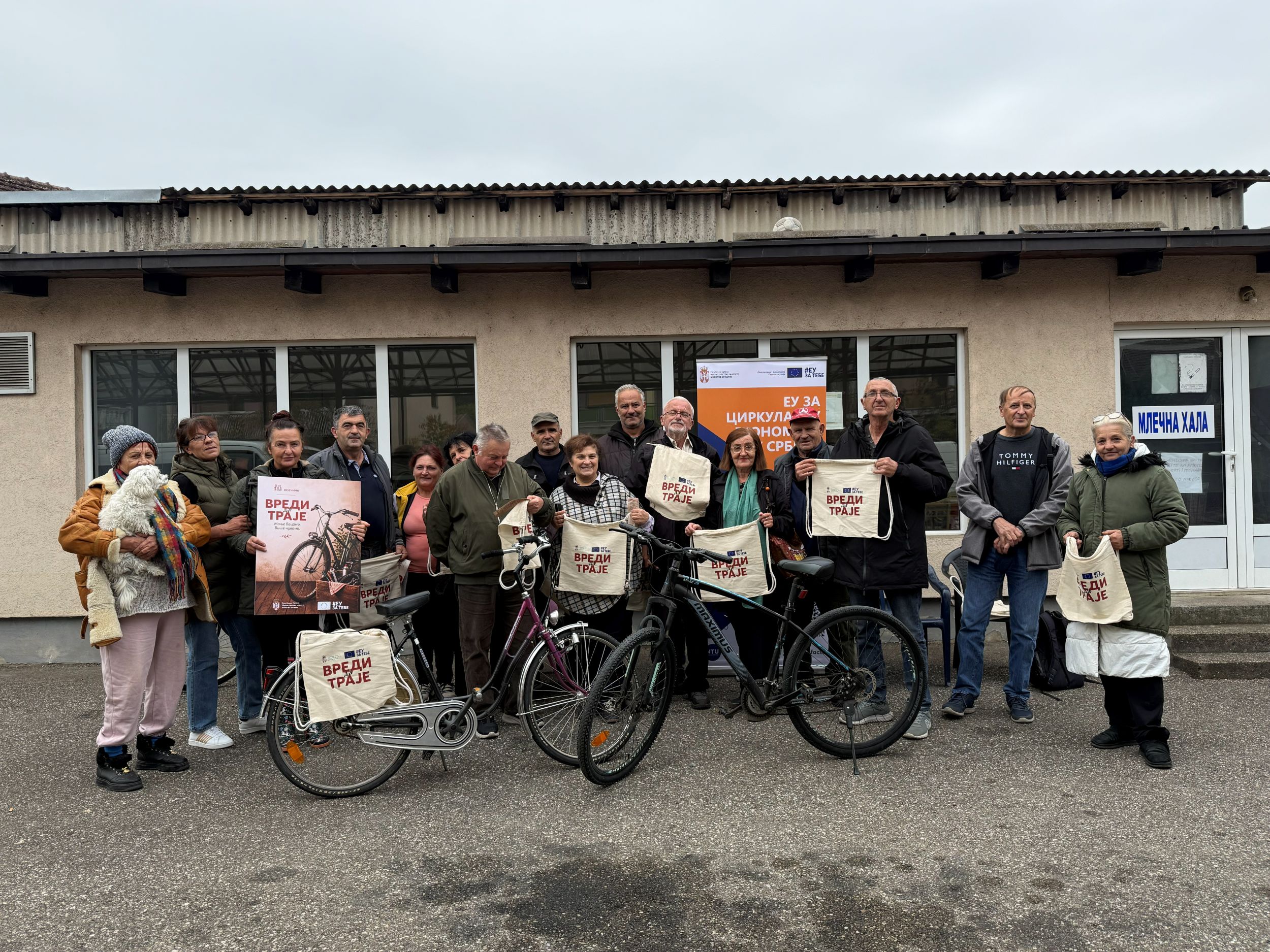
At the “Circular Bicycle Repair Workshop”, held at the Green Market, residents brought their bicycles for free servicing. Mechanics checked the condition of tyres, brakes, chains and lights, fixed minor faults and provided advice on regular maintenance. Participants learned what they could do themselves to keep their bicycles in good working order for longer, and which repairs should be left to professional mechanics.
“Circular economy means taking a more responsible approach to the things we use every day and recognising their value even when they become damaged or worn out. Through practical workshops like these, residents and young people acquire the knowledge and skills they need to extend the lifespan of everyday items, reduce waste and save money at the same time. The Ministry of Environmental Protection is committed to educating young people and actively involving them in promoting and applying circular economy principles, because we believe that responsible habits and awareness of the importance of resource conservation are developed from an early age. By sharing knowledge and encouraging concrete changes in local communities, we are laying the foundations for more sustainable development and a more responsible attitude towards the environment,” said Aleksandra Vučinić, Head of the Circular Economy and Sustainable Development Unit at the Ministry of Environmental Protection.
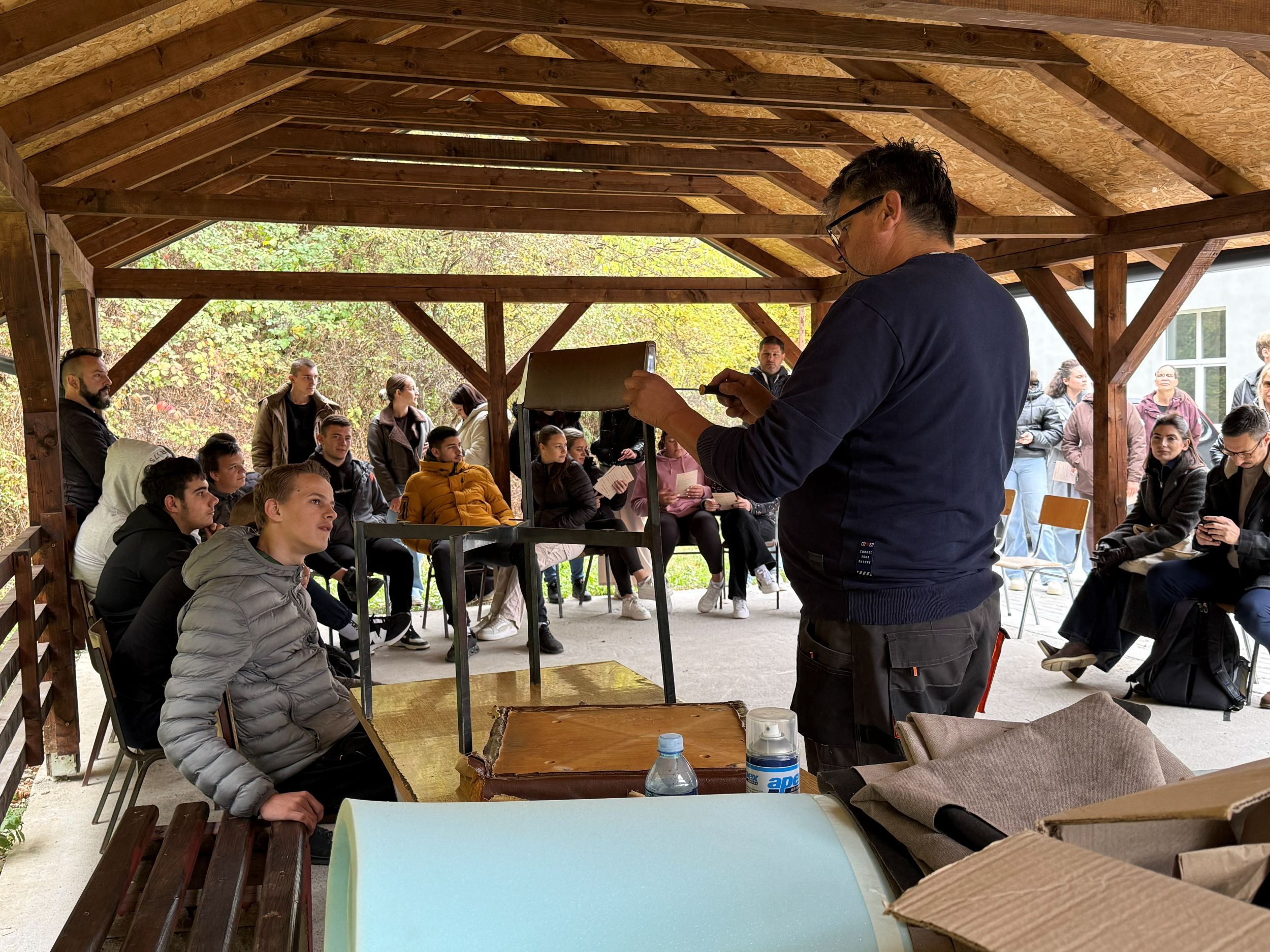
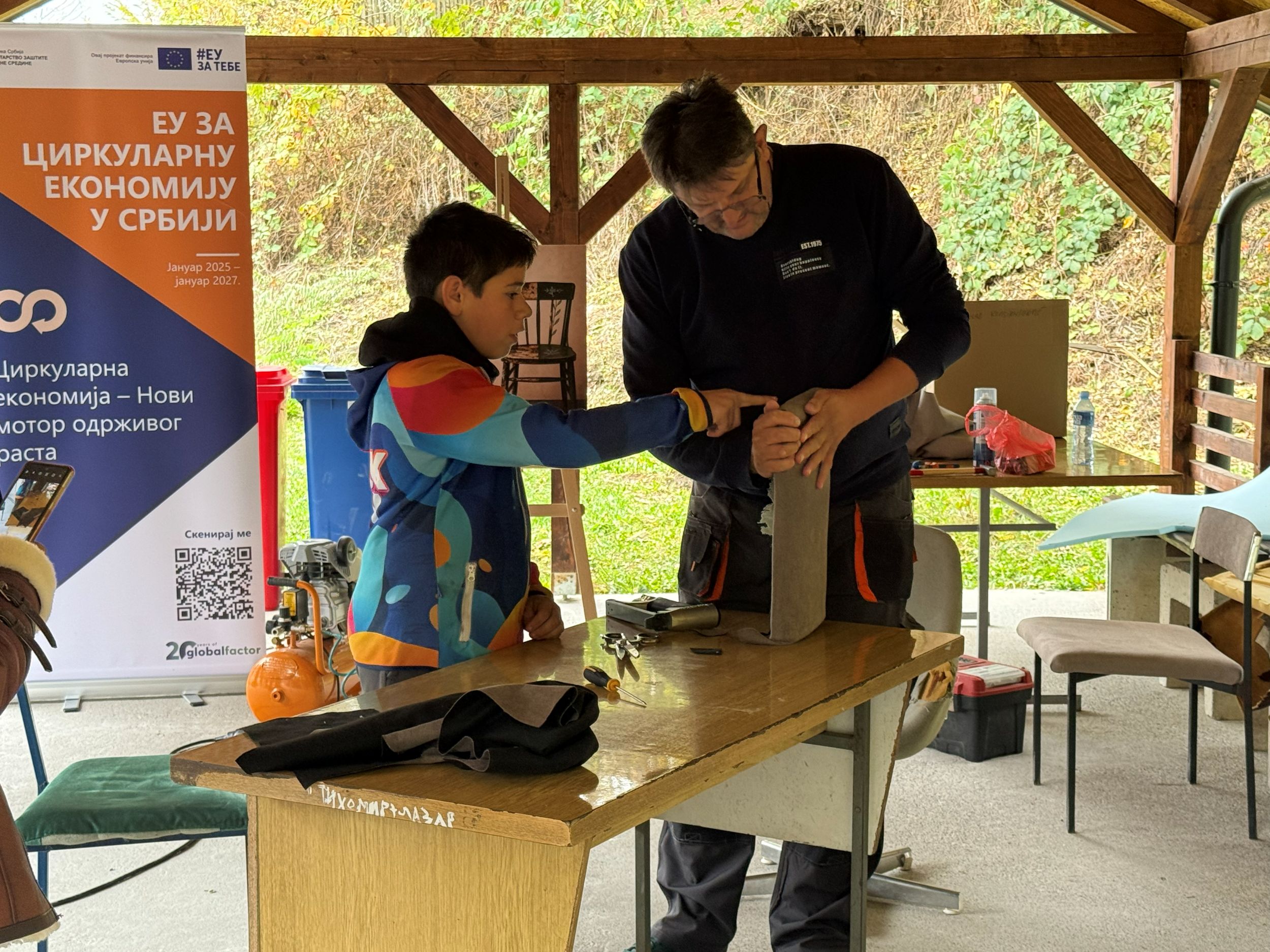
The “Old Furniture Restoration Workshop”, held at the “Braća Nedić” Educational Centre, introduced students to simple techniques for sanding, painting and repairing wood. Old chairs, shelves and other wooden objects demonstrated that signs of use and minor damage do not mean that furniture has lost its value.
“The European Union is proud to support practical workshops that help students and local communities extend the life of the things they already own, rather than replacing or discarding them as soon as a minor problem arises. This is more than just a practical skill – it is an excellent example of the circular economy in action. By adopting this approach in our everyday lives, each of us can contribute to a more sustainable future in which resources are used more responsibly and creatively,” said Mauro Di Veroli, Head of the Cooperation Section at the Delegation of the European Union to Serbia.
The workshops also drew on practices that are already familiar in Osečina: tools were maintained, furniture was restored, and repair skills were passed down from older to younger generations. This knowledge remains valuable today, helping keep items in use, reducing spending on new products and preventing waste.
The message from Osečina is simple: before throwing something away, it is worth checking whether we can repair it, restore it or find a new purpose for it.
The EU for Circular Economy in Serbia project is implemented by the Ministry of Environmental Protection with the aim of supporting Serbia's transition towards a circular economy through practical solutions that encourage more responsible resource use, waste reduction and the development of sustainable local communities. The project is funded by the European Union.
Photos: EU for Circular Economy in Serbia