Risk management as the foundation of modern tax audits was the central theme of two workshops for employees of the Serbian Tax Administration, delivered by Markus Drost, a German tax official with long-standing experience in tax audits. The workshops were organised within the EU PFM Facility project, in cooperation with the Tax Administration of t
Risk management as the foundation of modern tax audits was the central theme of two workshops for employees of the Serbian Tax Administration, delivered by Markus Drost, a German tax official with long-standing experience in tax audits. The workshops were organised within the EU PFM Facility project, in cooperation with the Tax Administration of the Republic of Serbia.
During these workshops, Drost presented the German risk management system as a key tool for effective tax audit planning, better resource allocation, and strengthened tax discipline. Special attention was given to elements that could be applicable to reforming Serbia’s tax administration.
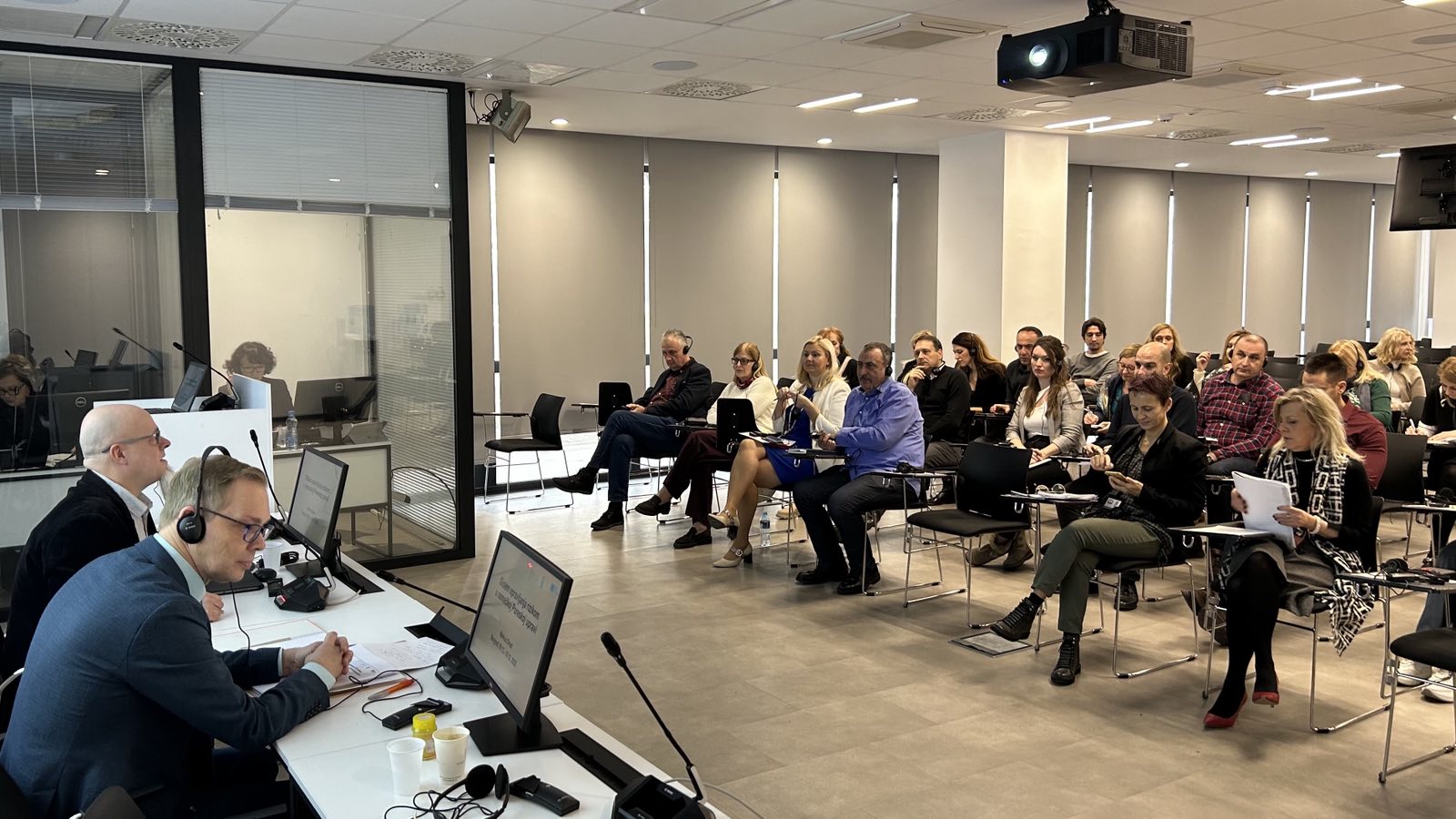
According to Drost, since 2017, the risk management system in Germany has been mandatory for case selection in tax audits.
“It is based on electronic analysis of data from tax returns, profit and loss statements, balance sheets, and other relevant sources to identify patterns that deviate from the norm, as well as significant discrepancies from the average in certain industries, such as repeated losses or sudden changes in financial operations. Based on these analyses, risk profiles are created, with automated tools systematically combined with the professional judgment of tax officials and their knowledge of specific sectors,” explains Drost.
He points out that experiences from the German system show that successful tax audits rest on a solid legal framework, clear organisation, high-quality data, a well-developed risk management system, and continuous training of tax officials.
“This combination enables effective suppression of irregularities, fair taxation, and strengthening of citizens’ and businesses’ trust in the tax system, which represents an important direction for further modernisation of the Serbian Tax Administration,” says the German tax expert.
Markus Drost adds that the results of the risk assessment are used not only to select taxpayers who will be subject to audit, but also to determine the intensity, scope, and duration of the audit.
“High-risk cases are subject to more detailed and demanding field audits, for which appropriate resources must be available, while taxpayers with lower assessed risk are subject to more limited forms of audit and/or desk reviews,” he says, noting that a smaller share of randomly selected audits is retained in this process, all with the aim of ensuring a preventive effect and maintaining trust in the fairness of the tax system.
Drawing on his experience as a tax official in Germany, Drost presents the framework for tax audits in his country as part of a standardised system based on provisions of German tax legislation.
“In this way, it is clearly set out which
categories of taxpayers may be audited, how audits are ordered, and how they
are carried out,” he says, further explaining the steps:
“The central form of audit is the general field tax audit, which is usually
conducted at the taxpayer’s premises, covers several types of taxes, and spans
at least three tax years. This form of audit is supplemented by special field
audits focused on individual taxes or specific issues, primarily VAT and
payroll tax, which are legally treated as special forms of regular field
audit.”
Drost also points to the system of classifying taxpayers, which is the same as in the Republic of Serbia, based on business size – large, medium, small enterprises, and micro-entities – primarily on turnover and profit.
“This classification strongly affects the frequency and scope of audits, so large enterprises are audited far more often and comprehensively than small and micro-enterprises. Case selection in this system combines risk analysis, sectoral knowledge, information from other authorities, and electronic risk management systems, with a limited number of randomly selected cases,” says the German expert, explaining the models used in the continuous process that deters taxpayers from attempting evasion.
The mentioned training program was organised within the EU PFM Facility project, financed by the European Union and implemented by the United Nations Development Programme (UNDP), in partnership with the Centre of Excellence in Finance (CEF) and the Ministry of Finance of Slovakia.
The German System of Tax Audits
“Ensuring the accuracy, completeness, and reliability of tax returns, establishing all facts relevant to taxation, checking business books and accompanying documentation, and correcting both underpaid and overpaid tax liabilities – these are the basic objectives of audits. In practice, audits are carried out by field inspectors through direct work with documentation and interviews with taxpayers, with the procedure usually announced in advance and conducted in accordance with clearly prescribed rules,” explains Markus Drost, a German tax official.